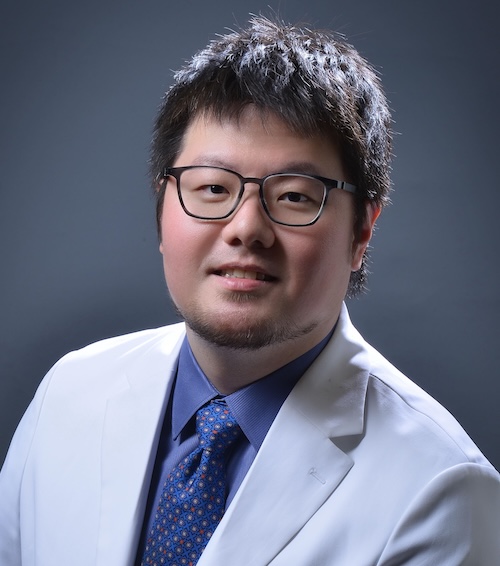
Brief Introduction
Dr. Bor-Shiuan Shyr graduated from Chung Shan Medical University in 2016 and completed his surgical residency training at Taipei Veterans General Hospital. Currently, he is the attending surgeon of General Surgery at Taipei Veterans General Hospital, and is actively involved in pancreas and upper gastrointestinal (UGI) surgery, including robotic pancreatectomy and pancreas transplantation.
Specialty
Pancreatic surgery, pancreatic transplant, robotic surgery, laparoscopic surgery.
Education
- M.D. (2009 - 2016): Chung Shan Medical University
Experience
- 2015 – 2016: Intern, Taipei Veterans General Hospital
- 2016 – 2017: PGY, Taipei Veterans General Hospital
- 2017 – 2021: Resident, Department of Surgery, Taipei Veterans General Hospital
- 2021 – 2022: Chief Resident of General Surgery, Department of Surgery, Taipei Veterans General Hospital
- 2022 – 2023: Fellow of General Surgery, Department of Surgery, Taipei Veterans General Hospital
- 2025 March 31 – April 4: Pancreatic surgery academic visiting at Cancer Institute Hospital, Japanese Foundation for Cancer Research (Prof. Yosuke Inoue, Yu Takahashi).
Selected Publications
- Bor-Shiuan Shyr, Bor-Uei Shyr, Shih-Chin Chen, Che-Chuan Loong, Yi-Ming Shyr, Shin-E Wang. A comparative study of pancreas transplantation between type 1 and 2 diabetes mellitus. HepatoBiliary Surg Nutr (HBSN) 2021;10(4):443-453
- Bor-Shiuan Shyr, Chien-Sheng Huang, Hui-Shan Chen, Po-Kuei Hsu, Chao-Hua Chiu, Han-Shui Hsu, Chun-Ming Tsai, Yuh-Min Chen. Sequence for Surgical Resection of Primary Lung Tumor for Oligometastatic Non-small Cell Lung Cancer. Ann Thorac Surg. 2022 Apr;113(4):1333-1340.
- Bor-Shiuan Shyr, Bor-Uei Shyr, Shih-Chin Chen, Yi-Ming Shyr (equal contribution to corresponding author), Shin-E Wang. Impact of tumor grade on pancreatic neuroendocrine tumors. Asian J Surg. 2022 Mar 1:S1015-9584(22)00149-X.
- Bor-Shiuan Shyr, Shin-E Wang, Shih-Chin Chen, Yi-Ming Shyr, Bor-Uei Shyr. Surgical and survival outcomes after robotic and open pancreatoduodenectomy for ampullary cancer: a propensity score-matching comparison. Asian J Surg. 2024; 47:899-904.
- Wang M‐L, Shyr B‐S (equal contribution to the first author), Chen S‐C, Wang S‐E, Shyr Y‐M, Shyr B‐U. Comparison of robotic and open central pancreatectomy. Int J Med Robot. 2024;e2562.
- Shyr BS, Chen TC, Wang SE, Chen SC, Shyr YM, Shyr BU. A Comparative Study of Pancreatic Acinar Cell Carcinoma: A Case-Control Study. Health Sci Rep. 2025 Apr 10;8(4):e70633.
- Shyr BS, Shyr YM, Chen SC, Wang SE, Shyr BU. Reappraisal of surgical and survival outcomes of 500 consecutive cases of robotic pancreaticoduodenectomy. J Hepatobiliary Pancreat Sci. 2024 Feb;31(2):99-109.
- Shyr BS, Wang SE, Chen SC, Shyr YM, Shyr BU. Mesopancreas dissection level 3 for pancreatic head cancer in combined robotic/open pancreatoduodenectomy: a propensity score-matched study. Surg Endosc. 2025 Feb;39(2):1191-1199.
- Oncological outcomes in minimally invasive pancreaticoduodenectomy: A single-center retrospective review of 930 cases. Asian Journal of Surgery, 2026.
National Yang Ming Chiao Tung University, Taipei, Taiwan
Background: Chyle leakage is a well-known but poorly characterized complication after pancreaticoduodenectomy (PD). However, no study examined the incidence of chyle leakage after robotic PD (RPD). This study aimed to evaluate chyle leakage after RPD or open PD (OPD).
Methods: Data regarding chyle leakage, including perioperative parameters and daily drainage volumes from the surgical drains, were prospectively collected from patients undergoing RPD or OPD, and these values were analyzed. The study included 283 patients, with 118 RPD and 165 OPD.
Results: The incidence of chyle leakage was 12.0% for overall patients, with 13.6% for RPD and 10.9% for OPD. Chyle leakage was eventually resolved in all patients through conservative treatment with dietary measures. The drainage volumes were significantly higher in patients with chyle leakage from postoperative days (PODs) 1 to 7, with a median of 240 mL on POD 1 and POD 7, as compared to 160 mL on POD 1 and 70 mL on POD 7 for those without chyle leakage. The number of lymph nodes involved and resected and the presence of pancreatic head adenocarcinomas affected the risk of developing chyle leakage, whereas the surgical approach used (RPD or OPD) did not.
Conclusions: Chyle leakage after PD is not rare, and it can eventually be resolved through conservative treatment. The extent and radicality of the surgery probably have a significant effect on the risk of developing chyle leakage, but the surgical approach used does not. Enteral feeding should be judiciously delayed for those with a high drainage volume. Given the high prevalence of chyle leakage after pancreatectomy, an ongoing clinical application of Hem-o-lok® has been conducted to prevent chyle leakage during pancreatectomy at our center.
National Yang Ming Chiao Tung University, Taipei, Taiwan
Background: Pancreatic cancer has been a notorious malignancy characterized by its difficulty to detect, high rate of metastasis, rapid progression, resistance to treatment with high recurrence and high mortality — a disease that has long challenged the medical community. Taipei Veterans General Hospital is a pioneer in introducing carbon-ion therapy (CIRT), a heavy-ion radiotherapy in Taiwan. For patients with initially unresectable locally advanced pancreatic cancer (LAPC), combining chemotherapy with CIRT could lead to significant tumor shrinkage, allowing for complete tumor removal. The Pancreatic Cancer Treatment and Research Center at Taipei Veterans General Hospital has achieved the highest number of successful cases of this once “impossible mission” worldwide.
Methods: In this presentation, we will share our experience of 26 cases of conversion surgery for initially unresectable locally advanced pancreatic cancer after neoadjuvant chemotherapy/carbon ion radiotherapy. There are 26 patients with initially unresectable LAPC undergoing successful conversion surgery including 15 (58%) pancreaticoduodenectomy and 11 (42%) distal pancreatectomy.
Results: R0 resection was noted in 25 (96.2%) by frozen section during operation, but in 18 (69%) confirmed by permanent pathology. The 1, 2, and 3-year disease-free survival (DFS) and overall survival (OS) are 91.3%, 46.4%, 23.2% and 91.3%, 61.0%, 33.9% respectively.
Conclusions: These promising results need to be confirmed by larger sample size and long-term follow-up.